
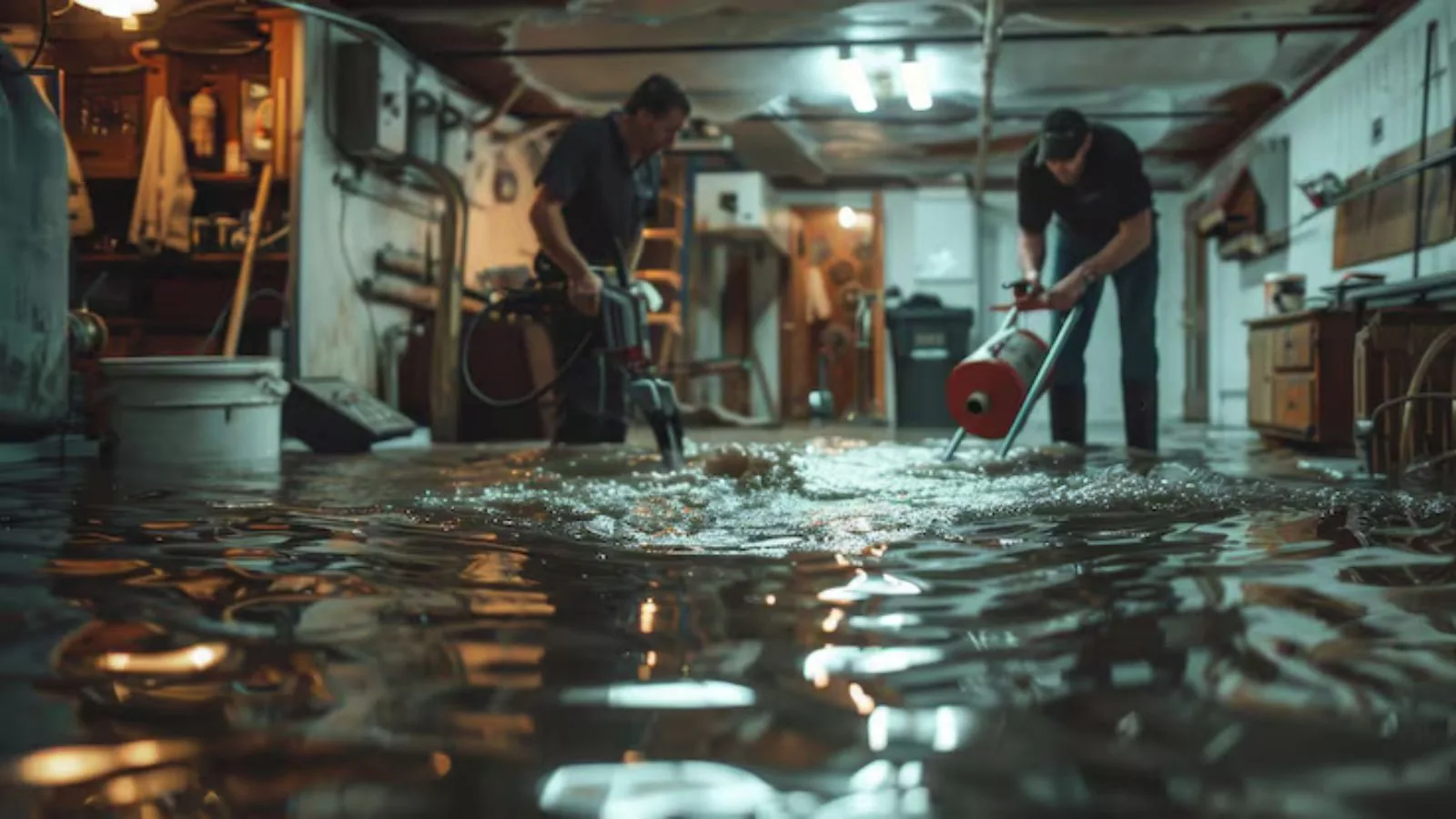
Standing water in an Edgewater home is an emergency, and our line is answered 24/7. While you wait for dispatch, turn off the water at the main if a pipe is feeding the flood, switch off power to wet rooms only if you can reach the panel while standing on dry ground, and lift anything small off the floor.
Water extraction is the removal of standing and bulk water from floors, carpet and low cavities before drying begins. In a house near the Indian River Lagoon it is usually the first job on site, because everything that follows depends on how much water is left behind in the materials.
What an emergency water extraction visit involves
The crew starts by finding where the water came from and whether it is still running. A supply line can be shut off in a minute, but a roof opening or a failed drain needs a different plan. Then comes a moisture survey with a pin or pinless meter and, where useful, a thermal camera that shows wet drywall and subfloor that look dry to the eye.
Bulk water comes out with submersible pumps for depth and wand extractors for carpet, pad and hard floors. Pad that is saturated is usually removed because it holds water far longer than the carpet above it. Baseboards may get small weep holes so trapped water can drain from the wall bottom plate.
Stop the source
Shut the main or the fixture valve. If rain or lagoon water is the source, note the waterline on the walls before anything is moved.
Extract and remove
Pumps and extractors pull standing water. Soaked pad and unsalvageable materials are bagged out so they stop wicking.
Survey and plan drying
Meters and a thermal camera map the wet zone, then the drying equipment layout follows that map.
Clean water, gray water and black water change the job
ANSI/IICRC S500 sorts water into three categories. Category 1 comes from a clean source such as a supply line. Category 2 carries contaminants, for example washing machine or dishwasher discharge. Category 3 is grossly contaminated, which includes sewage and rising floodwater. Category 3 water means porous materials such as carpet and pad are removed rather than dried, and the area is cleaned and treated before anything is rebuilt. Water that sits also climbs a category, which is why speed matters.
Why Edgewater homes need fast extraction
Edgewater sits between the Indian River Lagoon and the I-95 corridor, and low ground drains slowly after heavy rain. The National Weather Service storm summary for Hurricane Ian in 2022 recorded 19.02 inches of rain at Edgewater, and local reporting has described repeated street and yard flooding in the Florida Shores area after heavy storms. Water that enters a slab home spreads outward under baseboards and into the wall cavities, so a thin sheet on tile can mean wet drywall a foot up.
Florida's warm, humid air also shortens your window. The EPA advises that wet materials be dried within 24 to 48 hours to limit mold growth, which is why extraction is not something to leave until Monday. If the water is from a storm, see storm water damage cleanup. If it rose from the ground rather than a pipe, flood damage cleanup covers the added contamination steps.
After the water is out: drying comes next
Extraction removes the bulk water, but the floor, framing and drywall still hold moisture you cannot wipe away. Air movers, LGR dehumidifiers and sometimes drying panels finish the job, and the crew returns to read the meters until the readings match a dry reference. Drying time depends on how wet the materials were and how big the space is, and a few days is common. See structural drying and dehumidification for how that stage works and how we know it is finished.
What affects the cost of extraction
We explain scope and price before work starts. The factors that move a water extraction job are:
- How many square feet of floor are wet and how deep the water is.
- Whether the source is clean, gray or black water.
- Whether pad, baseboard or drywall has to be removed.
- Access, such as stairs, a lower level or a crawl space.
- Time of day, since an overnight call needs dispatch outside normal hours.
Because every loss is different, a number given over the phone before anyone has seen the water would be a guess. A written scope after the first look is the honest version.
Insurance and the paper trail
Take dated photos of the water, the source and any damaged belongings before they are moved. Florida Statute 627.70132 sets a one-year window from the date of loss to give your insurer notice of a new property claim, and 18 months for a supplemental claim. A mitigation invoice and moisture logs from the crew help your adjuster understand what was done and why.
Serving Edgewater at any hour
Calls come from houses off Riverside Drive, condos along US-1, commercial units near SR 442 and homes in Florida Shores. Late-night and weekend calls are routine for this work, and the line is staffed so a pipe that fails at 2 a.m. does not wait until morning. If a nearby town is affected, the same dispatch covers Scottsmoor and Mims. To talk to a dispatcher now, call (386) 699-0141.
Questions about water extraction in Edgewater
Yes. The line is answered 24/7, including nights, weekends and holidays. We offer same-day response when available, and the dispatcher will tell you what to do while the crew is on the way.
As soon as the source is stopped and it is safe to enter. Standing water moves into drywall, wood trim and subfloor quickly, and the EPA guidance of drying within 24 to 48 hours is a good benchmark.
A shop vacuum can handle a small spill on a hard floor. For water in carpet, pad or walls it will miss moisture that keeps feeding damage, and plugging equipment into wet areas is a shock risk. Call first if you are unsure.
Clean-water carpet can sometimes be lifted, extracted and dried in place. The pad is usually removed. If the water was gray or black, carpet and pad generally come out. Carpet water damage restoration explains the decision.
No. Extraction removes standing water, and drying removes the moisture left in materials. Without drying, damp drywall and wood can start to support mold growth. Mold remediation is a separate service if growth is already present.