
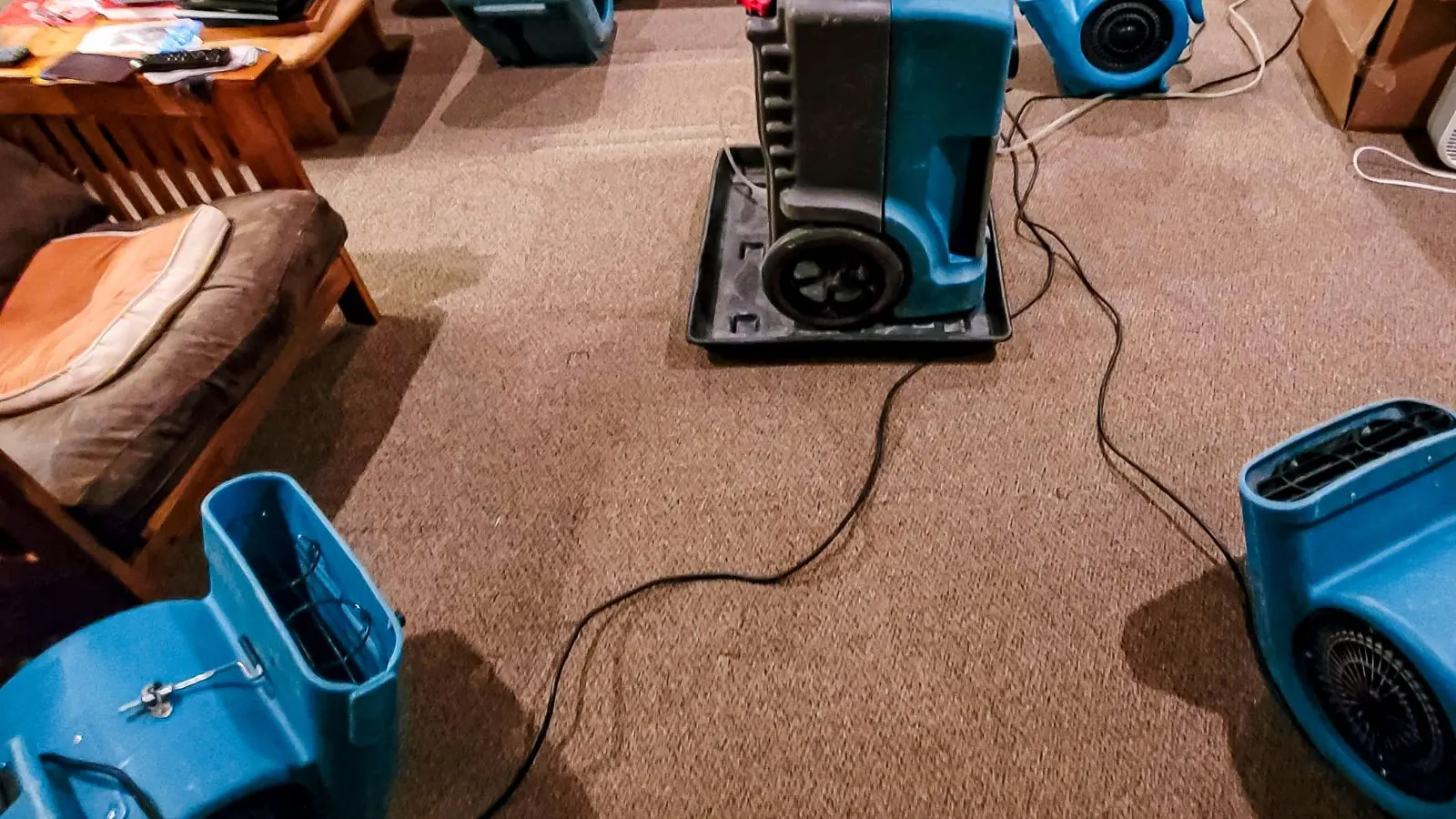
Structural drying and dehumidification is the controlled removal of moisture from framing, subfloor, drywall and contents after water has been extracted. It uses air movers, dehumidifiers and moisture readings to bring materials back to a dry reference level, and in Edgewater's humid climate it is the stage where jobs succeed or fail.
Walls feel damp and the room smells musty: is it still wet?
Surfaces can look dry long before the materials behind them are. Signs that a structure is still wet include a musty smell, cool or clammy walls, baseboards that look swollen, paint that bubbles, floors that feel cold and a window that keeps fogging inside.
Meters tell the truth. A pin or pinless moisture meter, a thermal camera and a hygrometer show where moisture remains. A room that feels dry may still read high in the wall base or subfloor.
The equipment and what it does
| Equipment | What it does |
|---|---|
| Air movers (axial and centrifugal fans) | Move air across wet surfaces to lift moisture. |
| LGR dehumidifiers | Remove moisture from the air so it keeps pulling water from materials. |
| Drying mats and injection panels | Dry floors and wall cavities without removing finishes. |
| Thermal camera and moisture meters | Map wet areas and confirm dry readings. |
| HEPA air scrubbers | Clean air when dust or odor is a concern. |
How a drying job runs
Map and plan
A moisture map is drawn and the equipment layout is set for the wet area.
Dry and monitor
Equipment runs and the crew returns to read the meters, adjust and remove equipment when readings are met.
Verify and document
Final readings are compared with dry reference points in the same house and logged.
Drying time depends on the materials and how wet they became. A few days is common, and structural drying with hardwood, concrete or thick framing can take longer. If anyone tells you a firm number before checking the damage, treat it as a guess. EPA guidance says wet materials should be dried within 24 to 48 hours to limit mold growth, so equipment should be running quickly after extraction.
Why Edgewater's climate matters
The coast sits in a humid climate, and the outdoor air often carries as much moisture as the indoor air a dehumidifier is trying to remove. For that reason, drying is done in a closed space with doors and windows shut, and an LGR dehumidifier does the work that open windows cannot. Air conditioning can help, but it is not a substitute for drying equipment.
What affects the price of drying
Scope and price are explained before work starts. They depend on:
- The number of rooms and the square footage that are wet.
- The material, such as drywall, wood, concrete or insulation.
- The number of days equipment runs.
- The number of monitoring visits.
- Whether insulation or drywall must be removed.
Equipment is part of the service, and we do not offer rentals.
What to do while equipment runs
- Keep doors and windows closed.
- Do not turn equipment off or move it.
- Keep cords clear of walkways.
- Tell the crew about new stains or smells.
Standards and sources
Equipment layout, moisture readings and dry standards follow the ANSI/IICRC S500 standard. The EPA's guidelines recommend drying wet materials within 24 to 48 hours.
Drying follows extraction. See water extraction for the earlier stage, and slab leak water damage for drying a concrete floor. If growth is already present, mold remediation is the next step. We serve Edgewater, Scottsmoor and Mims. To talk to a dispatcher now, call (386) 699-0141.
Questions about structural drying in Edgewater
A few days is common, but it depends on materials and how wet they were. Thick framing and concrete take longer. Readings, not the calendar, decide when to stop.
They remove moisture from the air and give off heat as they work. The noise and warmth mean the equipment is running as intended.
The number depends on the wet area and the materials. The crew sets the layout from the moisture map and adjusts it as readings change.
No. Open windows let humid Florida air in, which slows drying. Keep doors and windows closed while equipment runs.
A record of moisture readings, temperatures and equipment placement over time. Insurers and adjusters often ask for it.
No. The source has to be repaired first. Drying removes moisture left in the structure.