
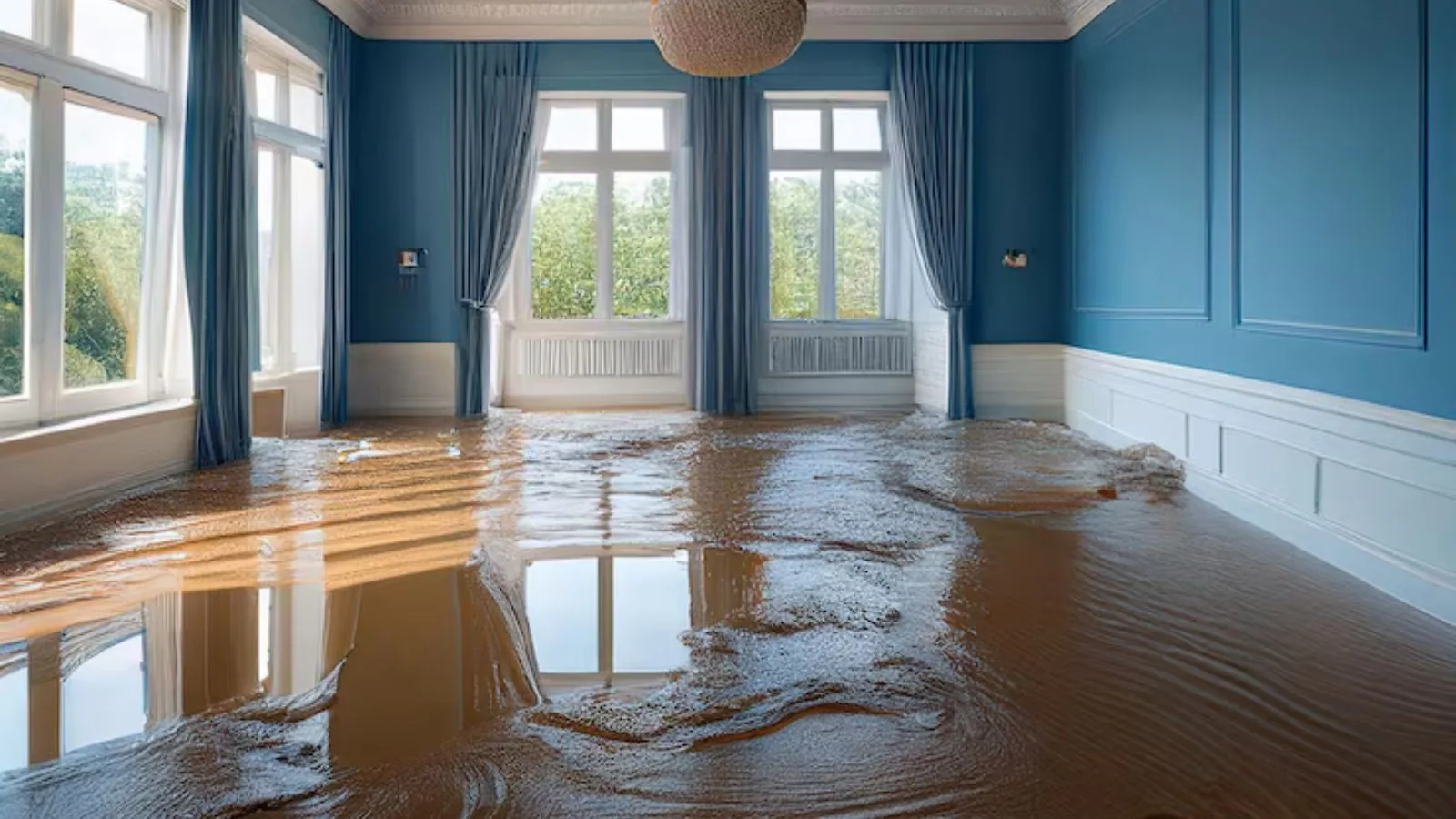
Wall and drywall water damage repair is the drying, removal and replacement of wet wall board, insulation and trim after a leak. Drywall absorbs water through the paper face, wicks it upward and loses strength, and a patch over a wet wall hides a problem rather than solving it.
Signs of wet drywall
Look for bubbling or peeling paint, brown stains with a ring, soft spots, swollen baseboards, cracked tape joints and a musty smell. Drywall that crumbles in your hand or feels spongy has lost its strength and should come out.
A stain may be much smaller than the wet area. Water can travel up the paper and along the framing. A pinless meter and thermal camera show where the moisture really is.
Dry it or cut it out?
| Condition | Usual decision |
|---|---|
| Clean-water leak caught within a day or two | Often dried in place with air movers and small weep holes. |
| Soft, swollen or crumbling board | Cut out and replace. |
| Gray or black water contact | Remove below the waterline and beyond. |
| Staining with musty smell | Open and inspect the cavity for mold. |
Find the edge of the wet area
Meters trace moisture along the wall, up from the base and across to nearby rooms.
Open and dry
Baseboard is removed and holes cut so air reaches the cavity. Wet insulation is replaced.
Verify and repair
Readings are checked. A drywall contractor replaces board, tapes, textures and paints.
Where the water was Category 3, board is cut above the visible waterline so the removed section includes the area the water wicked into. Water from above shows up on ceilings first, and ceiling water damage repair describes that path. Behind kitchen cabinets, see kitchen water damage restoration.
What affects the price
Scope and price are explained before work starts. They depend on:
- The height and length of wall that is wet.
- Whether insulation is wet.
- The number of rooms involved.
- Baseboard, trim and paint matching.
- Drying time.
Drywall replacement, texture and paint is done by a repair contractor, and we coordinate timing.
A note on painting over stains
Stain-blocking primer will not fix a wet wall. If the wall is still damp, paint will bubble again and mold may start. Dry first, test with a moisture meter, then prime and paint.
What moisture mapping adds before anyone cuts
A moisture map is a sketch of the wall with readings marked at set heights. It shows the edge of the wet zone, so the cut line follows evidence and not a guess. A thermal camera adds a quick view across the whole wall, since damp areas look cooler than dry ones, and the meter confirms what the camera suggests.
Mapping also finds the surprises. Water often travels along the bottom plate into the next room or down into a closet. A map taken at the start gives you a record to compare against once drying is finished and the wall is ready to close.
Ask whether baseboard will be reused. Painted trim that comes off carefully can often go back on, which keeps the finished room looking original and reduces the paint matching needed.
Standards and sources
Drywall drying and removal decisions follow the water categories in the ANSI/IICRC S500 standard. The EPA's guidelines on moisture and mold explain the risk of painting over damp board.
A stain that has been there for months deserves a look inside the wall. See mold remediation for what assessment and removal involve. Florida Statute 627.70132 sets a one-year notice window for a new claim. Our line is answered 24/7, with same-day response when available. We serve Edgewater, Scottsmoor and Mims. To talk to a dispatcher now, call (386) 699-0141.
Questions about wall and drywall water damage in Edgewater
Only after the wall is dry and the leak is fixed. Painting over a damp wall leads to bubbling and can hide mold.
Often several inches to more than a foot above the waterline, depending on the board and how long it sat wet.
No. Clean-water leaks caught quickly can often be dried in place. Soft, crumbling or contaminated board should come out.
A small hole drilled at the bottom of a wall so trapped water can drain. It is repaired later.
A repair contractor does that. We dry the structure and coordinate timing.