
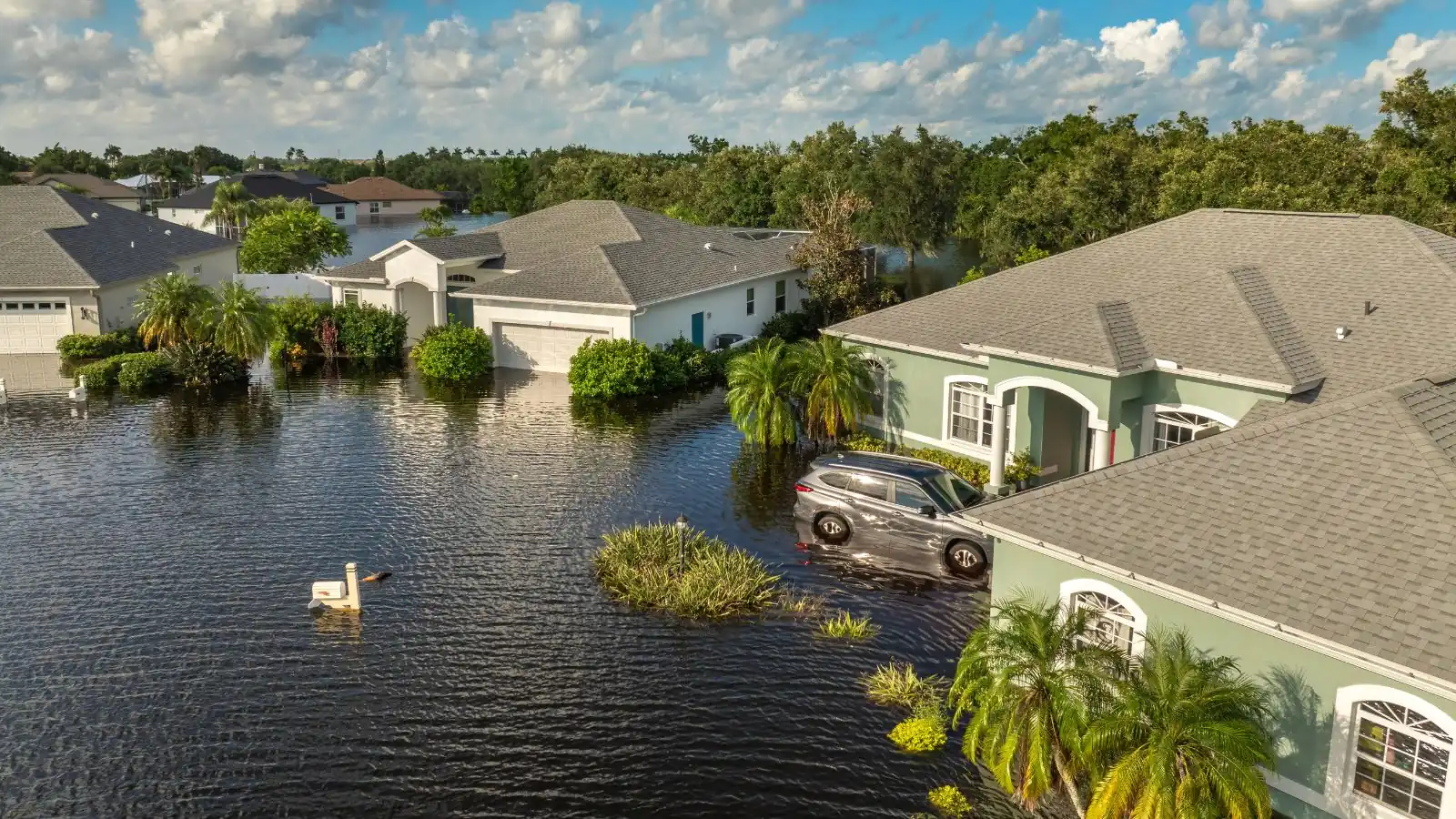
Storm water damage in an Edgewater home is an emergency and our line is open 24/7. Stay clear of downed lines and standing water until it is safe, turn off power if water is touching outlets, and photograph the damage. If a roof opening is letting rain in, a tarp from a roofer will slow the damage.
Storm water damage cleanup is the removal of rain and surge water that enters a building through the roof, windows, walls or doors, followed by drying and cleaning. It often mixes roof water, wind-driven rain and ground water in the same house.
How storms hurt Edgewater homes
Atlantic hurricane season runs from June 1 to November 30, and heavy rain can arrive outside those dates as well. The National Weather Service Hurricane Ian summary recorded 19.02 inches of rain at Edgewater in 2022. Wind-driven rain gets under shingles and past window seals, and water can come through soffits, vents and garage doors.
Surge and lagoon flooding differ. The City of Edgewater lists storm surge and river or lagoon flooding among its flood causes, and land near the Indian River Lagoon is more susceptible. Water from the ground carries contamination and is handled as described in flood damage cleanup.
Emergency cleanup after a storm: what it includes
Make safe and document
Photographs, waterline marks and a list of damaged items are collected before anything is moved.
Extract and remove
Standing water is extracted. Wet insulation, carpet and drywall that cannot be saved are removed.
Dry and monitor
Air movers and dehumidifiers dry the structure, with moisture readings logged until the materials are dry.
Roof water usually enters through ceilings first, so wet insulation and sagging drywall are common. For that part, see ceiling water damage repair. Wind may also damage windows and doors, which a carpenter or window company repairs.
Permits and claims after a storm
The City of Edgewater's Building and Permitting office, at 104 N Riverside Dr, issues permits for most construction and repair, and floodplain rules apply in flood zones. If repair costs reach 50 percent or more of the building's market value, the work is substantial damage and floodplain requirements apply. For insurance, Florida Statute 627.70132 sets a one-year window from the date of loss to give notice of a new property claim and 18 months for a supplemental claim.
Safety checklist after the storm
Do not drive through flooded roads.
Treat downed lines as live.
Never run a generator indoors or in an attached garage.
Wear boots and gloves in water of unknown source.
What affects the price
Scope and price are explained before work starts. They depend on:
- The number of rooms and the depth of water.
- Whether the water came from the roof, rain or the ground.
- Materials that need removal.
- Drying time.
- After-hours or holiday dispatch.
After a major storm many homeowners call at once, so scheduling can be tight.
After a major storm, share the date and the approximate time the water entered. It helps the dispatcher decide which calls must be handled first and gives your adjuster a clear timeline.
Safety checklist after the storm
- Stay away from downed lines.
- Do not enter flooded rooms with live outlets.
- Never run a generator indoors.
- Photograph the damage before moving belongings.
Standards and sources
Storm water cleanup follows the ANSI/IICRC S500 standard. Hurricane season dates come from the National Hurricane Center, and rainfall totals come from the National Weather Service Hurricane Ian storm summary.
We serve all of Edgewater along with Scottsmoor and Mims. Drying follows extraction as described in water extraction. To talk to a dispatcher now, call (386) 699-0141.
Questions about storm water damage in Edgewater
Yes. The line is answered 24/7, including nights, weekends and holidays, and we offer same-day response when available. During a major storm, call anyway so you are in the queue.
Wind-driven rain through a storm-damaged roof is often treated differently from rising water. Check your policy and ask your agent.
A tarp from a roofer slows more water from getting in. We handle the water removal and drying inside.
June 1 to November 30. Heavy rain can occur outside those dates too.
Under Florida Statute 627.70132, notice of a new claim is due within one year of the date of loss and a supplemental claim within 18 months.