
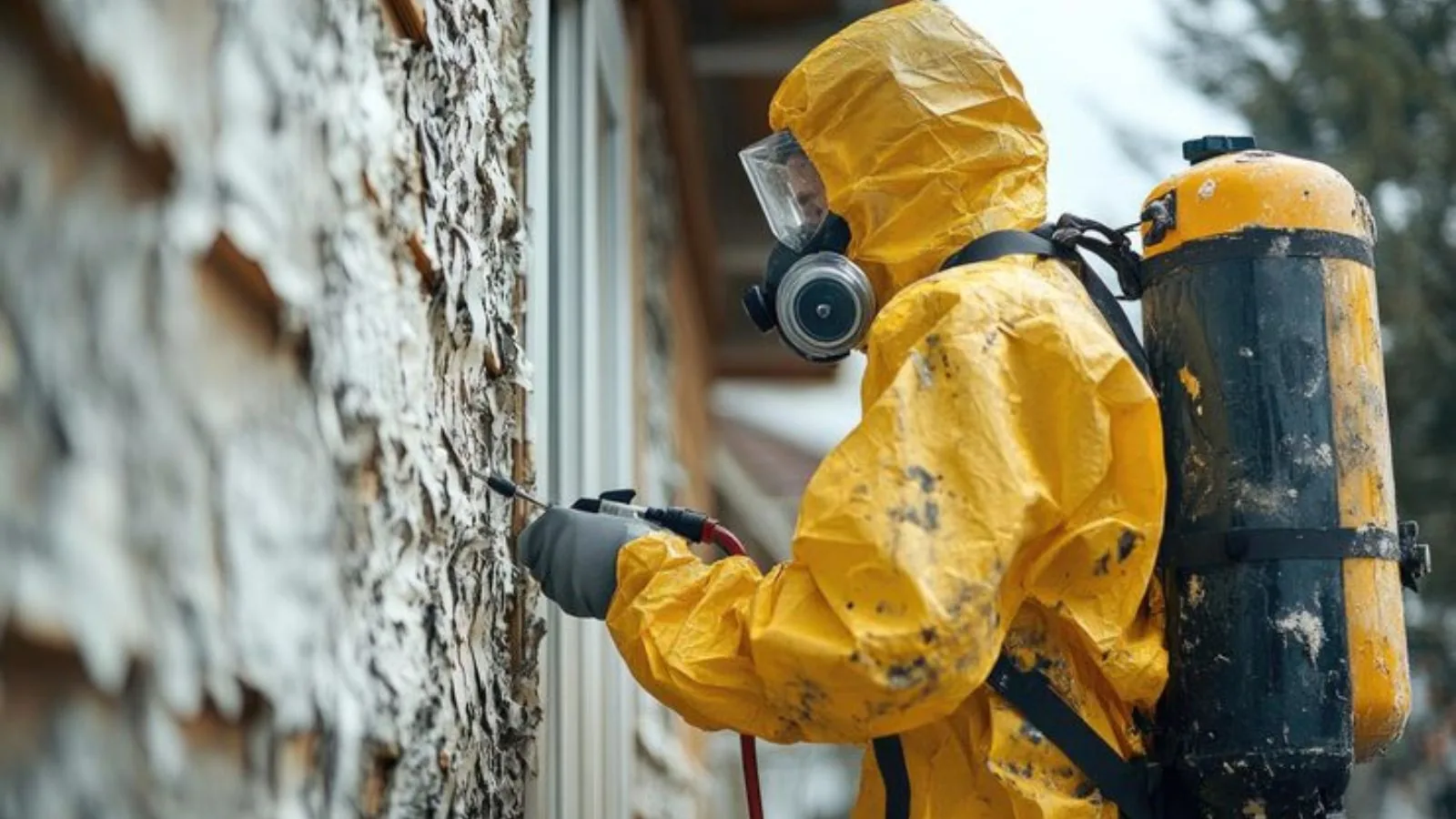
Mold remediation in Edgewater is the process of finding the moisture that fed the growth, removing contaminated material, cleaning the area and confirming the result. It follows water damage more often than it comes alone, so the moisture source and the mold are handled together.
How a leak turns into mold
Mold spores are in the air everywhere. They need moisture, a food source and time. Drywall paper, wood framing, carpet pad and dust provide the food, and a leak provides the moisture. The EPA advises drying wet materials within 24 to 48 hours because growth can start in that window, particularly in warm, humid conditions like Edgewater's.
That is why mold often shows up after a slow leak behind a wall, under a sink or above a ceiling, where a stain can sit for weeks. If you are seeing a stain or smell, find the leak first. Remediation without fixing the moisture source only repeats the cycle.
Inspection and testing come first
Florida licenses mold assessors and mold remediators separately under Chapter 468, Part XVI of the Florida Statutes and Rule 61-31 of the Florida Administrative Code, administered by the Department of Business and Professional Regulation. A mold assessor inspects, may sample air or surfaces, and writes a remediation protocol that says what is to be removed and how success is measured.
Section 468.8419 of the Florida Statutes bars the same company from both assessing and remediating a structure within 12 months of the work, so the testing is independent of the removal. This is a safeguard for you. If a company offers to test and remove in the same visit, ask how that fits the rule.
Assess
A licensed assessor inspects, finds moisture sources and writes a protocol.
Contain and remove
The work area is sealed off with plastic barriers and negative air. Contaminated porous material is removed and bagged.
Clean and dry
Surfaces are HEPA vacuumed and wiped, and the area is dried with dehumidifiers and air movers.
Clearance
A post-remediation check confirms the protocol was met before rebuild starts.
Standards and licensing
ANSI/IICRC S520 is the industry standard for professional mold remediation. It describes containment, removal and cleaning practices.
Florida requires separate licenses for assessors and remediators under Chapter 468, Part XVI.
Ask to see a contractor's state license and insurance before work begins.
Clearance testing for a home sale or loan
A buyer, a lender or an insurer may ask for proof that mold was addressed. A post-remediation clearance report from an independent assessor is the document that does that. It compares the cleaned area to a reference and states whether the protocol was met.
If you plan to sell, keep the assessor's protocol, the remediation invoice and the clearance report together. A clean report does not predict the future. It documents the condition on the day of the check.
| Situation | Usual path |
|---|---|
| Small visible patch on a hard surface | Fix the moisture, clean the area, monitor. |
| Stained drywall with a musty smell | Open the wall, assess the cavity, remove affected board. |
| Growth in multiple rooms or an HVAC system | Assessor protocol, containment and removal by a licensed remediator. |
| Pending home sale or loan | Assessment, remediation, then independent clearance. |
What we do and do not do
We coordinate mold work as part of a water damage job and can direct you to a licensed assessor. We do not make health claims about mold, and we do not promise that it will not return. What we can promise is a clear scope and price before work starts, moisture readings that show materials are dry, and notes for your assessor and insurer.
What affects the cost of mold work
Scope and price are explained before work starts. They depend on:
- The area affected and whether it reaches multiple rooms.
- Whether the HVAC system is involved.
- The materials that must be removed.
- Containment and air filtration needed.
- Assessment and clearance testing.
Fixing the moisture source, whether a roof, pipe or air conditioner, is a separate trade.
Mold coverage varies a great deal between policies, and many limit or exclude it unless it follows a covered water loss. Read your policy and ask your agent. Florida Statute 627.70132 sets a one-year notice window from the date of loss. Drying earlier prevents many problems, so see structural drying, wall and drywall water damage repair and AC leak water damage for common sources. We serve Edgewater, Scottsmoor and Mims. To talk to a dispatcher now, call (386) 699-0141.
Questions about mold remediation in Edgewater
Not always. If you can see growth, testing may not change what you do. A licensed assessor can advise on testing when growth is hidden, widespread or tied to a sale, loan or insurance claim.
Florida law, under section 468.8419, bars an assessor from remediating a structure it assessed within the last 12 months and bars a remediator from assessing one it remediated within 12 months.
The EPA advises drying wet materials within 24 to 48 hours. Growth can begin after that, depending on the material and conditions.
It is a check by an independent assessor after removal to confirm the protocol was met. Buyers and lenders may ask for it.
No. For health questions, ask a doctor.
The dispatch line is answered 24/7. We offer same-day response when available for water that is feeding growth.