
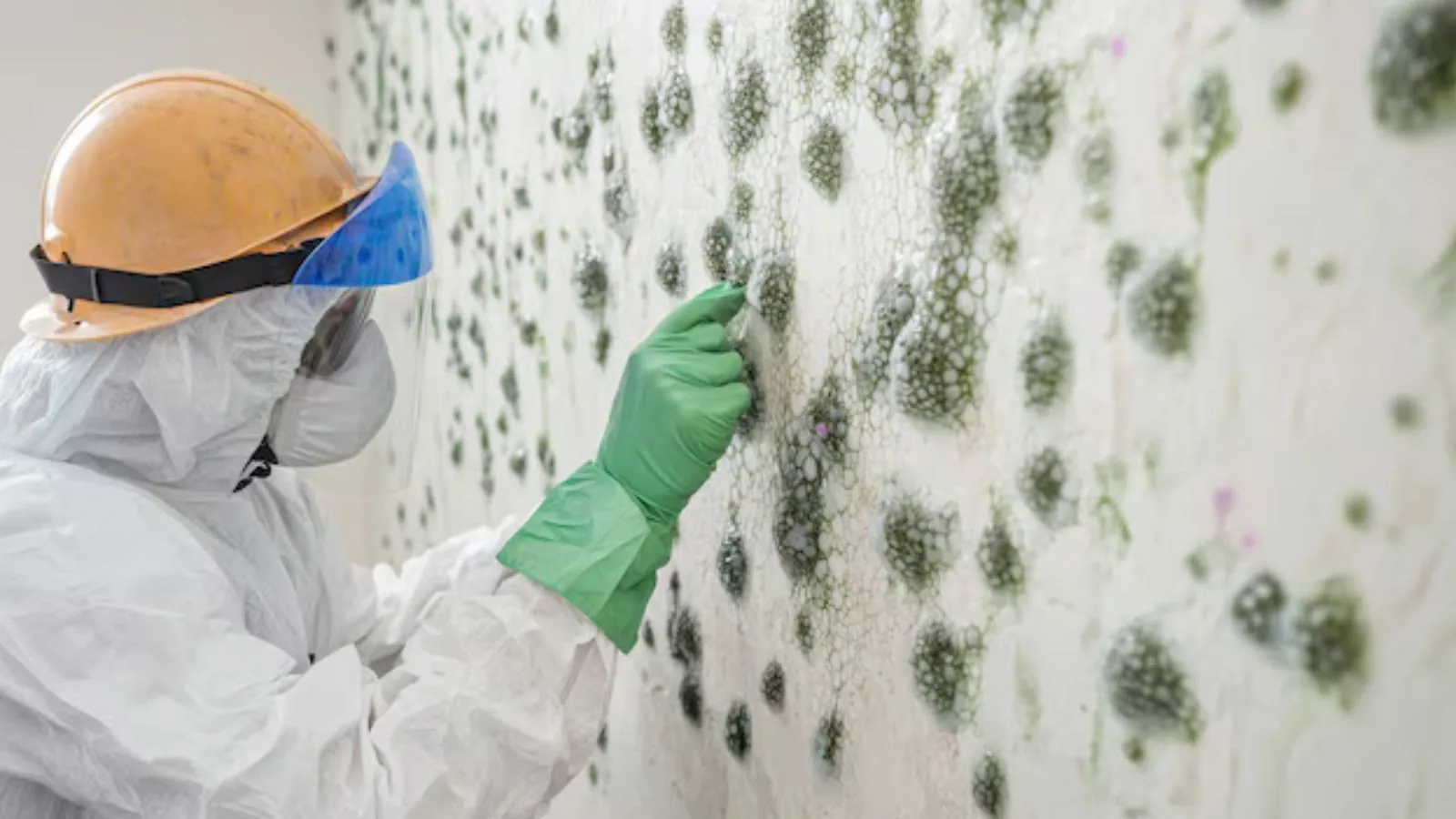
Mold remediation is the process of finding the moisture that supports growth, removing contaminated material, cleaning the area and confirming the result. It sounds simple, but a stain wiped with bleach is not remediation, and the difference matters when you plan to sell, rent or file a claim.
This guide explains the steps in plain terms and describes how Florida regulates the work, so you know what to expect from a contractor and an assessor.
Why moisture is the real problem
Mold needs moisture, a food source and time. Drywall paper, wood and carpet pad are food, and a leak is the moisture. If you clean the growth and leave the leak, the cycle repeats. That is why a remediation plan starts by finding the source, whether it is a pipe, a roof opening, an air conditioner drain or humidity trapped in a closed room. For common sources, see AC leak water damage and wall and drywall water damage repair.
The stages of remediation
Assessment
A mold assessor inspects the property, looks for moisture and writes a protocol that describes the work and how success is measured.
Containment
The work area is sealed with plastic and kept under negative air so spores are not spread through the house.
Removal
Contaminated porous materials such as drywall and insulation are removed and bagged. Hard surfaces are cleaned.
Cleaning and drying
Surfaces are HEPA vacuumed and wiped. Dehumidifiers dry the area.
Clearance
An independent check confirms the protocol was met before rebuild begins.
Who is allowed to do what in Florida
Florida licenses mold assessors and mold remediators under Chapter 468, Part XVI of the Florida Statutes, with rules in Chapter 61-31 of the Florida Administrative Code. The Department of Business and Professional Regulation administers the licenses.
The state also separates the two roles. Section 468.8419 says an assessor may not remediate a structure it assessed within the previous 12 months, and a remediator may not assess one it remediated within that period. That keeps the person who tests from profiting from the cleanup.
Standard behind the work
ANSI/IICRC S520 is the industry reference for professional mold remediation. It covers assessment, containment, removal and cleaning. A contractor who follows it should be able to describe each step.
When you do and do not need a professional
| Situation | Usual path |
|---|---|
| A small patch on a hard surface such as tile or sealed counter | Fix the moisture, clean the area and monitor it. |
| Stained drywall with a musty smell | Open the wall, check the cavity and remove affected board. |
| Growth across several rooms or in the air handler | Assessor protocol and a licensed remediator. |
| A home sale, rental or insurance claim | Assessment, remediation and independent clearance. |
A local note for Edgewater homeowners
The EPA advises drying wet materials within 24 to 48 hours to limit mold growth, which matters in a humid place like Edgewater where indoor air carries a lot of moisture. After a storm, ceiling leaks, wet insulation and damp closets are the usual starting points. The National Weather Service recorded 19.02 inches of rain at Edgewater during Hurricane Ian in 2022, and rain at that scale leaves a lot of wet material behind.
Hurricane season runs from June 1 to November 30. If your home takes on water in that window, call a restoration crew for drying quickly and have damp areas checked rather than waiting for a smell.
What remediation is not
Remediation is not painting over a stain, fogging a room with a deodorizer or wiping a wall with a diluted cleaner and leaving the leak behind. It is also not a promise about the future. It is a documented process with a start, an end and a check, and it ends when the protocol is met.
Ask any contractor to describe the final check in advance. If they cannot say who will perform it, what it measures and what happens if the area does not pass, the process is incomplete. A clear plan up front prevents arguments later.
Keep every document from the process together: the assessor's protocol, the contractor's scope, photographs of the work area and the final clearance report. A single folder, paper or digital, saves time whenever someone asks for proof.
Safety checklist if you suspect mold
- Do not disturb the area with a dry brush or vacuum.
- Close the door to the room.
- Fix the moisture source.
- Call a licensed assessor for anything larger than a small patch.
We handle drying and coordinate mold work through the mold remediation service and can point you to a licensed assessor. We do not make health claims about mold. If you have health concerns, talk to your doctor. We serve Edgewater, Scottsmoor and Mims, and we explain scope and price before work starts.
Common questions
Bleach on a porous surface does not remove the material that mold feeds on and does not address the moisture source. A remediation plan covers both.
Not always, but for large areas, hidden growth or a sale or claim, an independent assessor's protocol is a good idea. Florida's separation rule keeps testing and removal independent.
Plastic barriers and negative air pressure that keep disturbed spores from spreading to other rooms.
The Department of Business and Professional Regulation licenses assessors and remediators under Chapter 468, Part XVI.
It depends on the area and the materials. The protocol and clearance result decide when the work is finished.