
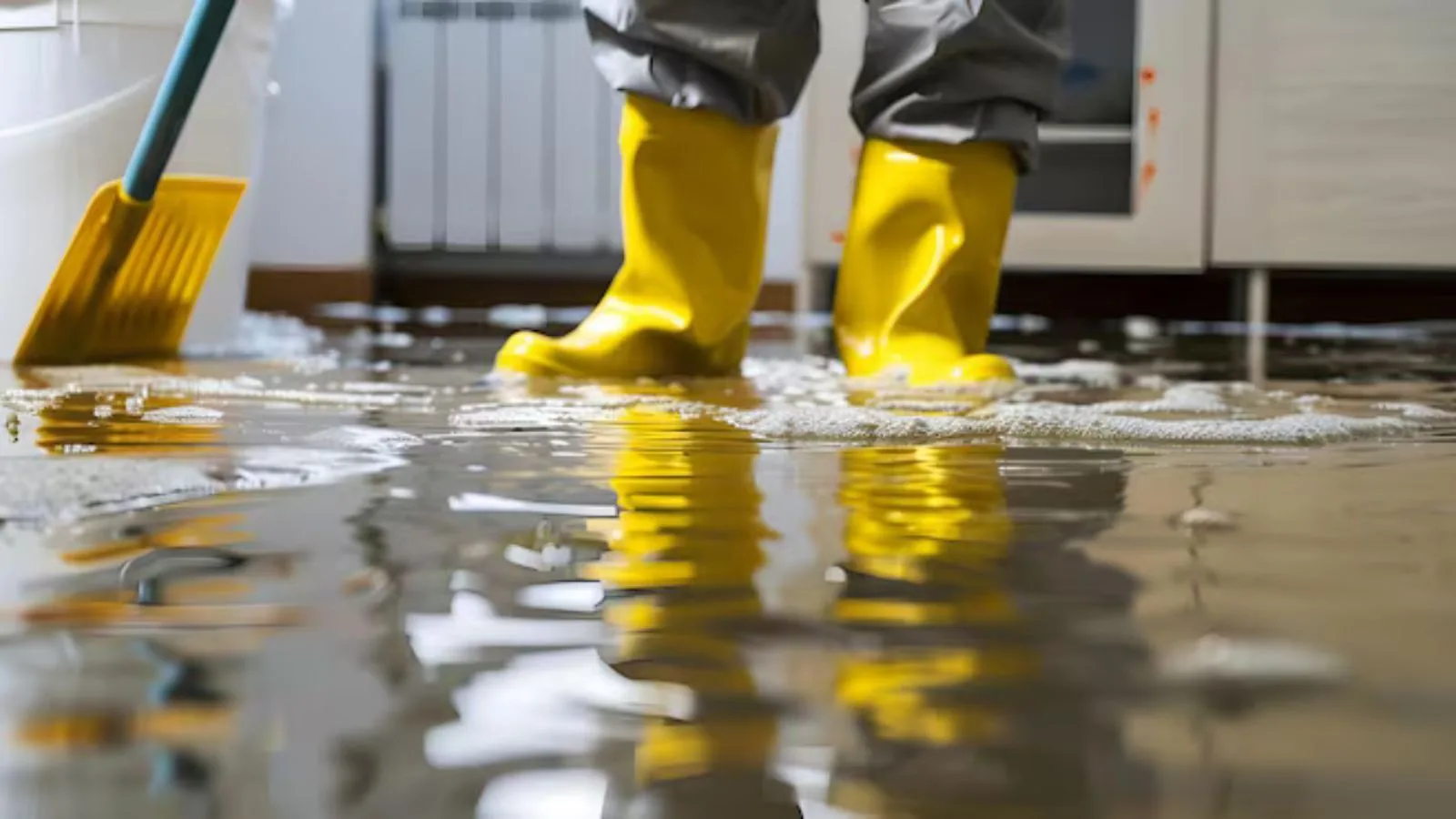
The first hours after water damage set up the whole claim. What you photograph, who you call and how fast the structure starts drying all show up later in the adjuster's file. This guide lays out the steps in order for Edgewater homeowners, with the pieces that most often get missed.
We are not an insurer, so the steps below describe good practice and not coverage advice. Your policy and your adjuster decide what is paid. Our role is the water side: extraction, drying and records.
Step 1: Make it safe and stop the water
Close the main or the fixture valve, and keep people out of any room where water is near outlets. If a ceiling is bulging, clear the room. Safety comes before photographs, but the photographs should follow within minutes. If you cannot stop the water, call a plumber or the City of Edgewater's utility line for a main problem.
Step 2: Photograph before you clean
Take wide shots of each room and close shots of the source, the waterline and the damaged items. Include the date on your phone. Film a short video walking through the wet areas. Once cleanup starts, much of this evidence is gone, so do this first.
Step 3: Notify your insurer
Call the claims line on your policy or your agent. Give the date and the cause as you understand it, and say the water is being dried. Ask about your deductible, whether you need an adjuster's visit before work starts and what they want to see. Write down the claim number and the name of the person you spoke to.
Claim timing in Florida
Florida Statute 627.70132 sets a one-year window from the date of loss for notice of a new or reopened claim and 18 months for a supplemental claim. Do not wait for repair estimates before giving notice.
Step 4: Start mitigation
Drying cannot wait for the claim to settle. The EPA advises drying wet materials within 24 to 48 hours to limit mold growth, and most policies expect reasonable steps to limit further damage. A restoration crew extracts water, removes materials that cannot be saved and sets up air movers and dehumidifiers. See structural drying for how readings decide when drying is complete.
Step 5: Keep the paper trail
- Claim number and adjuster contact details.
- Photos and video from before and after cleanup.
- Moisture maps and drying logs from the restoration crew.
- Receipts for hotels, meals and emergency purchases if your policy covers loss of use.
- Written estimates from repair contractors.
Step 6: Meet the adjuster
Walk the adjuster through each wet area and show the source. Keep the failed part if you have it. Share the moisture logs and ask when to expect the scope and the payment decision. If you disagree with the scope, ask for the reasoning in writing and bring in your contractor's estimate.
Step 7: Repairs and permits
Rebuild work usually comes after the structure is dry. In the City of Edgewater, most construction and repair needs a permit through Building and Permitting, which is at 104 N Riverside Dr. Your contractor should know which permits apply, but you can also ask the office directly.
A local note for Edgewater claims
If your home is in a mapped flood zone, repairs can trigger floodplain rules. The city's floodplain information explains that when repair costs reach 50 percent or more of a building's market value, the work counts as substantial damage and all repairs are treated as substantial improvement. That can change what is required during the rebuild, so ask Building and Permitting early.
The city also lists causes of flooding in Edgewater, including localized flooding from low land and poor drainage and flooding near the Indian River Lagoon. Telling your adjuster plainly where the water came from keeps the claim in the right category.
Keep a log of every call during the claim. A short line with the date, the person and what was said can resolve a disagreement quickly later on.
If you rent or own a condo
Renters should notify the landlord and their own renters insurer right away, since the landlord's policy usually covers the building and the renter's policy covers belongings. Condo owners should check the association's master policy and their own unit policy, and ask the association who handles water that originates in a neighboring unit. Take the same photographs and keep the same records. The steps above still apply.
Standards and sources
Notice deadlines come from Florida Statute 627.70132. The permit and floodplain details come from the City of Edgewater, and drying practice follows the ANSI/IICRC S500 standard.
After the water is out, flood damage cleanup covers contaminated water, and wall and drywall repair covers what happens to wet board. If you live outside Edgewater proper, we also work in Scottsmoor and Mims.
Common questions
Stop the water and make the area safe. Then photograph everything, call your insurer and start drying.
No. Drying should start quickly to limit further damage. Document first, then dry, and tell the adjuster what you are doing.
Most construction and repair needs a permit through the city's Building and Permitting office. Ask them if you are unsure.
Florida Statute 627.70132 allows one year from the date of loss for notice of a new claim, but reporting promptly is wiser.
Ask for the reason in writing, review the policy language and consider a second opinion from a licensed public adjuster or an attorney.