
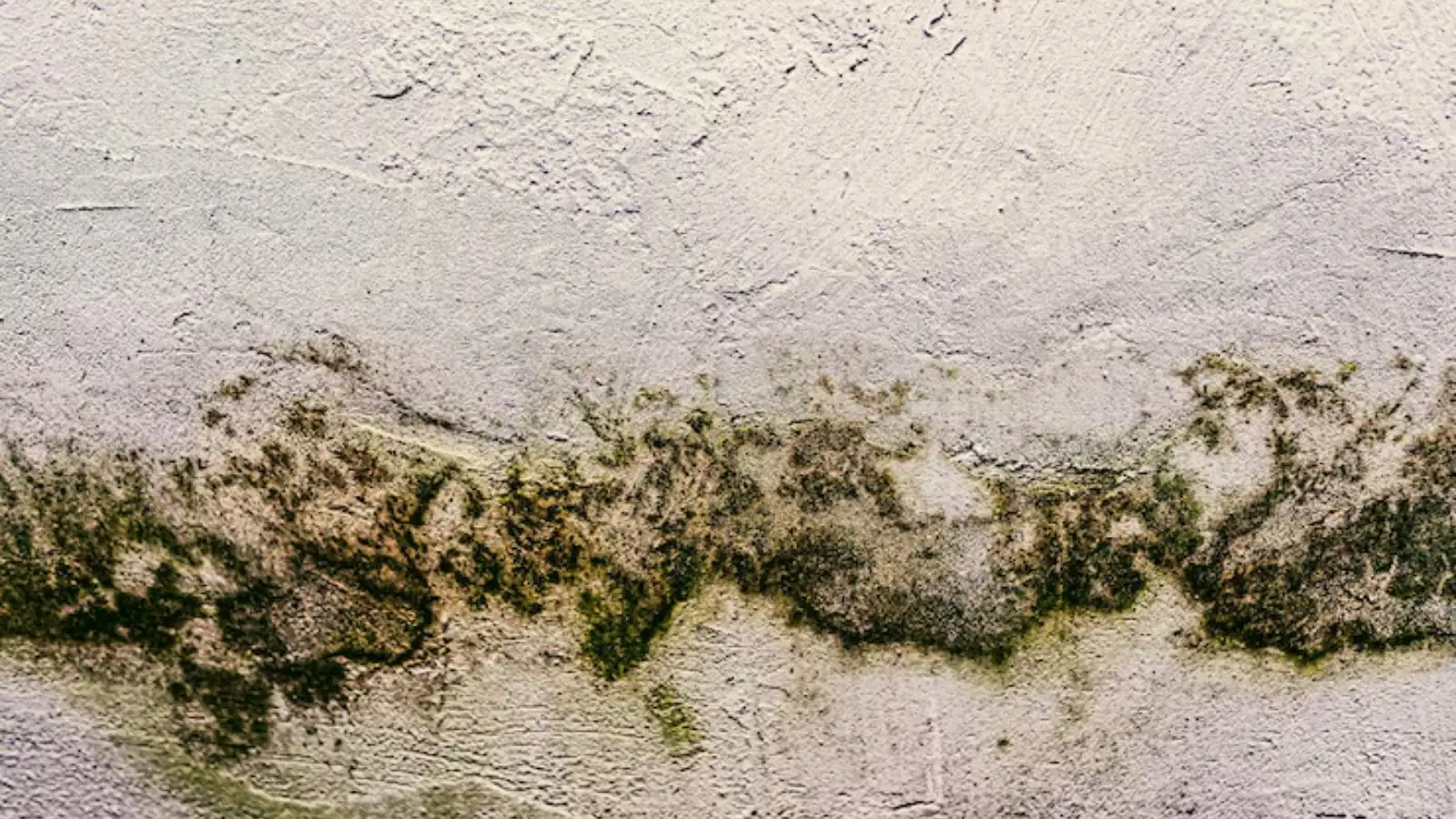
People use mold and mildew almost interchangeably, and that is fine in everyday talk. Mildew often describes flat, powdery or downy growth on a surface, while mold is a wider word for fungal growth that can be fuzzy, slimy or spotty and can penetrate materials. The real question is not what to call it but how far it goes and why it is there.
This guide describes what each tends to look like in an Edgewater home and how to decide the next step.
How they tend to look
| Feature | Mildew, usually | Mold, usually |
|---|---|---|
| Texture | Flat, powdery or downy | Fuzzy, slimy or spotty. |
| Color | White, gray or yellow | Black, green, blue or brown. |
| Where | Surfaces such as bathroom tile, shower curtains and window sills | Drywall, wood, carpet and ceiling tile. |
| Depth | Mostly on the surface | Can grow into porous material. |
Color alone is not a reliable guide. Black growth is not automatically worse than green, and only a laboratory can identify a specific type. For practical purposes, treat any growth as a sign of moisture to be fixed.
Where each shows up in a coastal home
- Bathrooms: soap film and humidity on grout and caulk.
- Window frames: condensation on cool mornings.
- Closets: still air and damp walls, especially on exterior walls.
- Ceilings: stains under an air conditioner or a roof leak.
- Garages and utility rooms: leaks from water heaters and washers.
Deciding what to do
A small patch of surface growth on a hard surface is a cleaning job. Drywall, carpet or wood with growth is a drying and removal question. A musty smell with no visible growth means moisture is present somewhere hidden. The EPA's guidance on mold in the home treats moisture control as the key to prevention, and that is a good rule here.
A quick decision guide
Small patch on tile or glass: clean it and fix the humidity.
Growth on drywall or ceiling: find the leak and consider removal.
Growth after a flood or a leak: call for drying and consider an assessor.
Musty smell with no source: have moisture mapped.
A local note for Edgewater homeowners
Edgewater's climate is humid, and surfaces in a closed bathroom or a cool bedroom can stay damp for long stretches. The National Weather Service storm summary for Hurricane Ian in 2022 recorded 19.02 inches of rain at Edgewater, and a damp house in the weeks after a storm is a setting where mildew and mold both show up.
Hurricane season runs from June 1 to November 30. If you are planning to be away during that window, make sure someone can check for leaks and run the air conditioner so humidity stays in check.
What you can safely do yourself and what to leave alone
Wear an N95 respirator, gloves and eye protection for a small cleanup. Keep the air from moving across the patch with a fan, since that sends loosened spores through the room. Scrub with detergent and water, dry the surface and discard rags and sponges in a sealed bag.
Leave alone anything bigger than a few square feet, anything on drywall that is soft or stained all the way through and anything near the air handler. Those jobs call for a plan and equipment that a homeowner does not usually have.
Ways to keep surfaces from staying damp
- Wipe shower walls and glass after use, or run a squeegee.
- Fix dripping faucets and fixtures promptly.
- Leave a gap between furniture and exterior walls so air can move.
- Run the air conditioner in summer even when you are away, so indoor humidity stays low.
- Use a hygrometer to check the humidity in closets and bathrooms.
How professionals decide what they are looking at
An assessor looks at more than color. They check moisture readings, the material, the pattern of staining and the history of leaks. They may take a tape lift or an air sample when the situation calls for it, and a laboratory can then report what is present and in what amount.
For most homeowners that level of detail is unnecessary. If you can see growth on a porous material or smell it with no source, the right move is to fix the moisture and have the area looked at. Labels matter less than the path to a dry, clean surface.
When in doubt, treat the surface as damp first and dirty second. Dry it, fix the source and then clean. That order solves most small cases, and it points you quickly to the bigger ones.
Standards and sources
Cleaning advice follows the EPA's guidelines on mold in the home, and professional practice follows the ANSI/IICRC S520 standard.
If you want to know what removal involves, see mold remediation. For musty walls after a leak, wall and drywall water damage repair describes drying and repair. We do not make health claims about mold, and we serve Edgewater, Scottsmoor and Mims.
Common questions
Color is not a reliable guide. Treat any growth as a moisture problem and have large areas assessed.
You can tell that growth is present, but only a lab can identify a type.
It can clean small surface patches, but it does not fix moisture. Follow the EPA's guidance for small hard-surface cleanups.
Humidity from showers and poor ventilation. Run the fan and wipe damp surfaces.
No. For health concerns, talk to your doctor.