
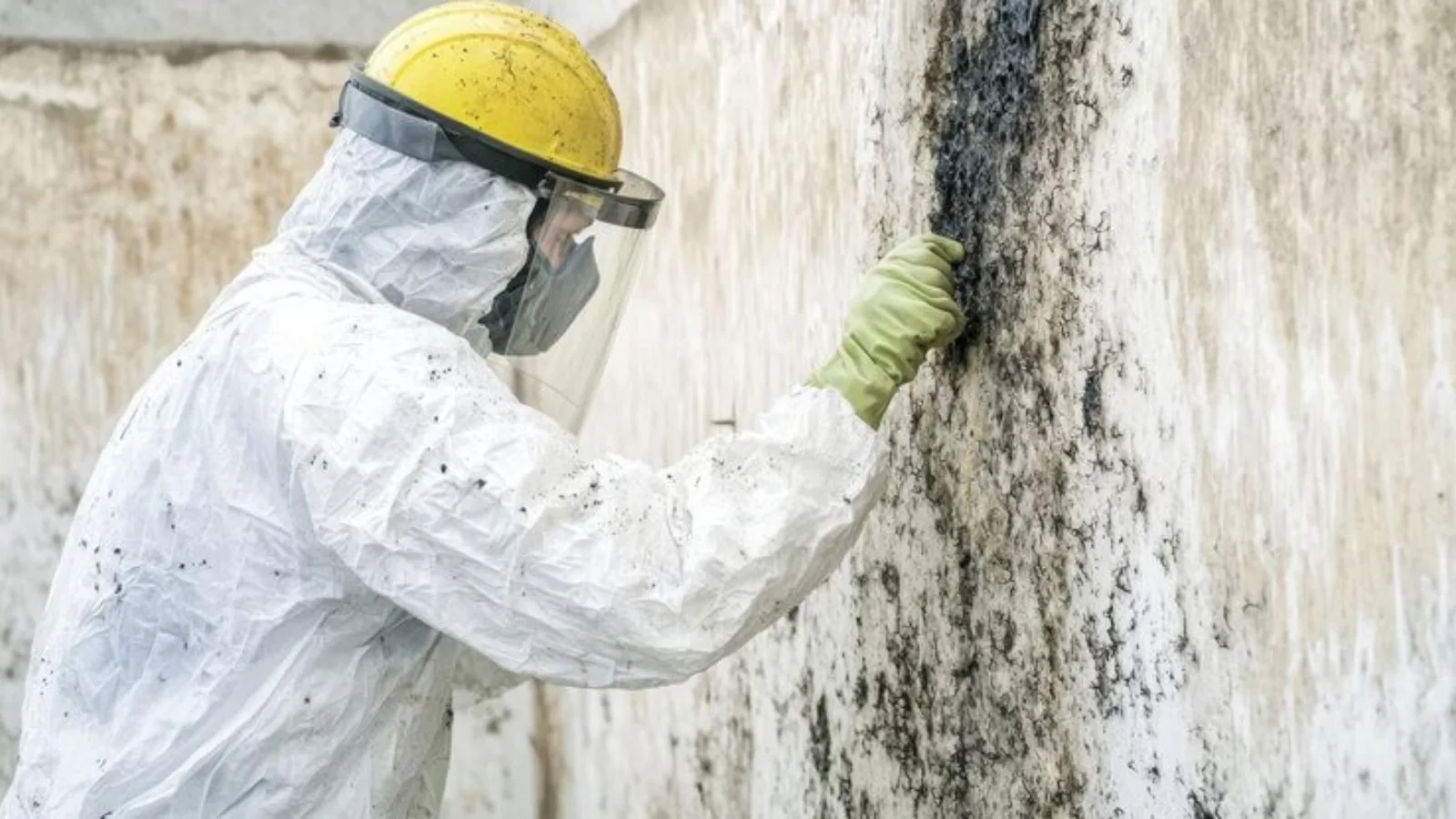
Mold damage removal follows a sequence. Done out of order, it can spread the problem rather than fix it. If you are planning work in an Edgewater home or deciding whether a contractor's proposal makes sense, this walkthrough covers what each stage should include.
We coordinate this work as part of water damage jobs and do not promise outcomes that depend on conditions we cannot control. What follows is the usual order of work under the ANSI/IICRC S520 standard.
Before any removal: the protocol
A licensed assessor writes a remediation protocol after inspecting the property. It names the affected areas, the moisture sources, the materials to be removed and the measures that will show the work is complete. A protocol is the document that a contractor works from and that a later clearance check is measured against. Without one, there is no clear standard for done.
Setting up containment
Containment is a sealed work zone. Crews hang plastic sheeting, tape the seams, shut off or cover HVAC registers in the area and set a HEPA air scrubber that creates negative pressure, so air flows into the work zone and not out. A decontamination chamber at the entrance lets workers remove protective gear before leaving.
This step protects the rest of the house. Disturbing mold without containment can send spores through the home, so skipping it is a red flag in any proposal.
Removing contaminated materials
| Material | Usual treatment |
|---|---|
| Drywall and insulation with growth | Cut out, double bagged and removed. |
| Carpet and pad | Typically removed and discarded. |
| Wood framing | HEPA vacuumed, sanded or cleaned and dried. |
| Hard surfaces such as tile or metal | Cleaned with a HEPA vacuum and damp wipe. |
Porous materials are removed because the growth penetrates them. Surfaces that can be cleaned are cleaned, not painted over. After removal, a HEPA vacuum passes over everything, followed by a damp wipe, and another vacuum pass.
Drying and fixing the source
The area has to be dry before rebuild. Dehumidifiers and air movers run until moisture readings fall to a dry reference. If the cause was a pipe, a roof or an air conditioner, it has to be repaired too. Structural drying describes the equipment and the readings used to confirm it.
Independent clearance
The final step is a check by the assessor, not the remediator. Florida's section 468.8419 prohibits the same company from assessing a structure it remediated within the previous 12 months, and from remediating one it assessed. A passing result means the protocol was met on that day.
A local note for Edgewater homeowners
Florida regulates mold professionals through the Department of Business and Professional Regulation under Chapter 468, Part XVI, with rules in Chapter 61-31 of the Florida Administrative Code. If a contractor proposes mold work, ask for the license number of the assessor and of the remediator, and check them with the state.
In a humid coastal area the pace of drying matters. The EPA advises drying wet materials within 24 to 48 hours, and in the Edgewater area a leak that is not dried can leave a closet or a wall cavity damp for weeks.
Questions to ask a contractor before work starts
- Do you hold a Florida mold remediator license, and may I see the number?
- Who wrote the protocol, and is that assessor independent of your company?
- How will you contain the work area and protect the HVAC system?
- What will be removed and what will be cleaned?
- How will the clearance check be done, and by whom?
- What happens if the clearance check fails?
A clear contractor answers each question without hedging. If the answers wander or the contractor offers to skip the protocol to save money, pause and get another opinion.
What to expect while work is underway
During containment the area will be sealed with plastic, and you will hear air scrubbers running. Plan to stay out of the work zone and to keep pets and children away. Most jobs involve several visits: setup, removal, cleaning and drying, then the clearance check. Dust control and noise vary, and the contractor should tell you which rooms are affected and for how long. Ask who will be on site each day and how to reach them if you have a concern.
When the job is finished, ask for a written summary of what was removed, what was cleaned and what readings were taken. That summary becomes part of your property file and helps if you sell or file a claim later.
Safety checklist during mold work
- Stay out of the sealed work area.
- Keep pets and children away from the containment zone.
- Do not open the plastic barriers.
- Ask the crew before running the HVAC system.
For a deeper description of what the service involves, see mold remediation. If the cause is a leak above, ceiling water damage repair covers the repair side. We work in Edgewater and in nearby Scottsmoor and Mims.
Common questions
To keep disturbed spores from spreading to the rest of the house. Containment is part of the S520 approach.
No. Paint does not remove growth or fix the moisture, and growth can return through it.
Florida's section 468.8419 separates the roles so that testing stays independent of the cleanup.
Vacuuming with a filter that captures very small particles, used to clean surfaces after removal.
No. For health questions, ask your doctor.