
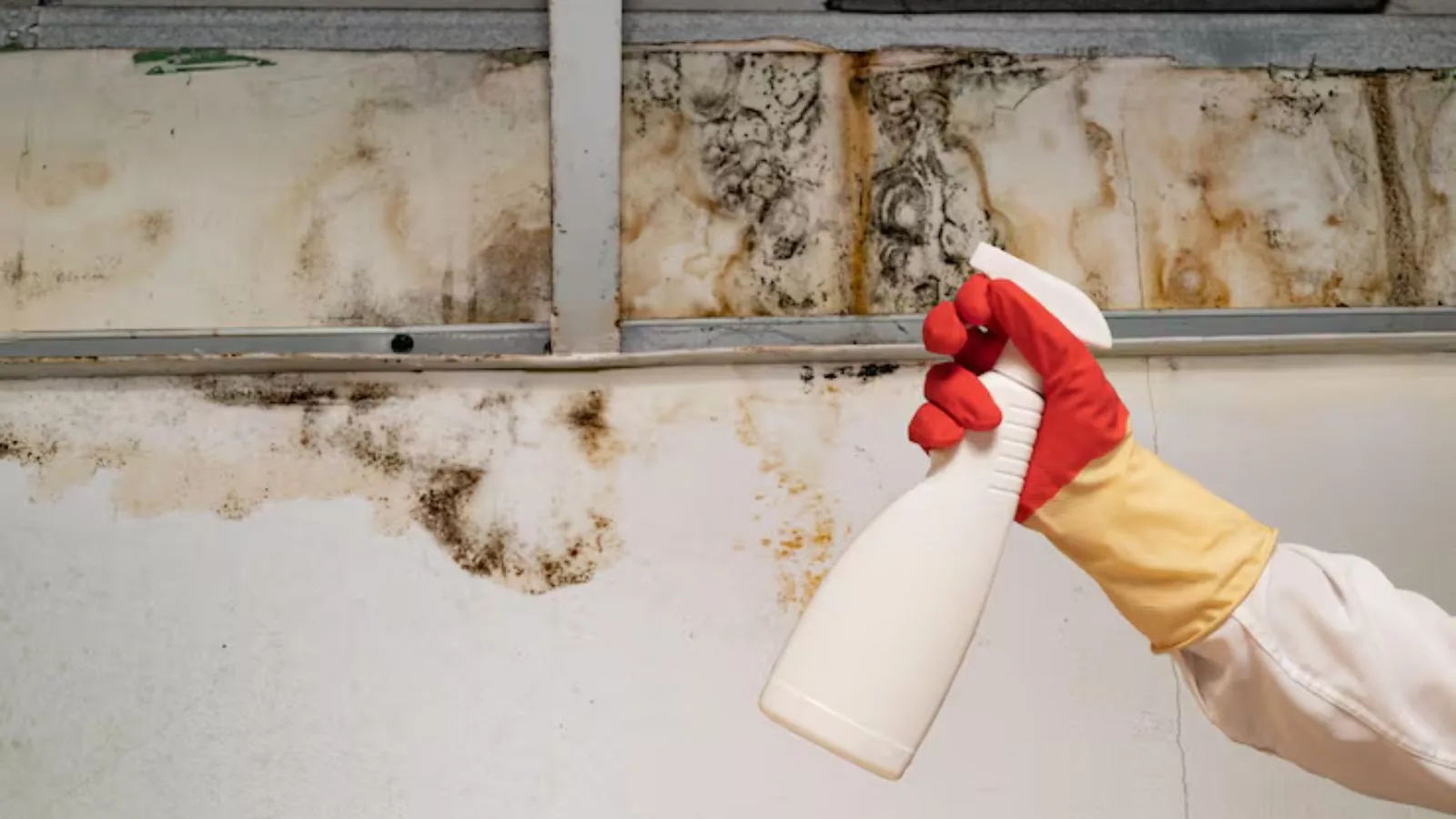
Homeowners in humid places clean mold and mildew all the time, and for small hard-surface patches that is reasonable. The trouble comes when the patch is only the visible part of a bigger problem, or when the same spot comes back every few weeks. This guide explains the line between a DIY clean and a call to a professional.
We are a water damage restoration team, so we start from the moisture. If you fix the moisture, the cleaning is the easy part. If you do not, the cleaning is repeated indefinitely.
A DIY clean that makes sense
A small patch on a hard, non-porous surface such as tile grout, glass, metal or a sealed counter can be cleaned by the homeowner. The EPA's guidance on mold in the home suggests scrubbing with detergent and water and drying completely. Wear gloves and eye protection, ventilate the area and never mix bleach with ammonia or other cleaners.
| Situation | DIY or professional |
|---|---|
| Small spot on tile or glass | DIY clean, then fix the humidity. |
| Patch on drywall or ceiling | Check the moisture first, possibly open the wall. |
| Growth after a leak or flood | Professional drying and assessment. |
| Musty smell with no visible source | Moisture mapping and possible assessor. |
| Growth in or near the air handler | Professional inspection. |
When cleaning is not enough
Mold on porous materials such as drywall, carpet, ceiling tile and insulation grows into them, and wiping the surface leaves the inside untouched. If the material stayed wet for more than a day or two, removal is usually the answer.
A recurring stain is another sign. If a corner of a ceiling or a closet wall turns dark again after cleaning, moisture is still reaching it. That could be a roof leak, a pipe in the wall or condensation from an air conditioner. See ceiling water damage repair and AC leak water damage for the common sources.
Mold versus mildew in practice
Mildew is a word for surface mold that is flat and powdery. The cleaning approach is similar, and the real question is what the surface is and how long it has been wet. Detailed identification is something an assessor does, not a homeowner.
Controlling moisture is the lasting fix
- Run bathroom fans during and after showers.
- Keep indoor humidity at a level that does not fog windows.
- Fix leaks as soon as you find them.
- Keep closets ventilated and avoid pushing furniture tight to exterior walls.
- Clean the air conditioner drain line on a schedule.
A local note for Edgewater homeowners
Edgewater's climate is humid, and the EPA's guidance on drying wet materials within 24 to 48 hours is a useful benchmark after any leak. The National Weather Service recorded 19.02 inches of rain at Edgewater during Hurricane Ian in 2022, which shows how much water a storm can put on a roof in a day.
If your home took on water during hurricane season, which runs from June 1 to November 30, have damp areas dried and checked even if you cannot see growth. Hidden moisture in wall cavities and attics is where trouble begins.
Safety checklist for a small DIY clean
- Wear gloves, eye protection and an N95 respirator.
- Open a window or run a bath fan if the room allows.
- Never mix bleach with ammonia or acids.
- Bag the used rags and sponges and take them out of the house.
- Wash your hands and clothes afterward.
If you feel unwell during or after cleaning, stop and talk to a doctor. We do not give medical advice, and we do not make health claims about mold.
What changes after a storm or a leak
A house that was dry last month may be damp after a storm. Check closets on exterior walls, the area behind furniture and ceilings below roof penetrations. Small patches that appear within weeks of a leak often respond to fast drying and cleaning. Patches that grow or return despite cleaning point to hidden moisture, and a moisture meter or thermal camera is the next tool to pick up. Early attention costs far less than letting a damp wall sit through the rest of the season.
A hygrometer costs little and tells you whether a room stays too damp. Readings that stay high for several days, even with no visible growth, are a reason to look for a hidden source before something starts.
Standards and sources
Cleaning advice for small hard-surface patches follows the EPA's guidelines on mold in the home, and larger jobs follow the ANSI/IICRC S520 standard.
If a DIY clean does not hold, see mold remediation for what assessment and removal involve. We do not make health claims about mold. We serve Edgewater, Scottsmoor and Mims.
Common questions
On hard surfaces, detergent and water are usually enough. Bleach does not penetrate porous materials, and it should never be mixed with ammonia or other cleaners.
Because moisture is still reaching the area. The source has to be found and fixed.
The word is often used for flat surface growth. The cleaning approach is similar, and identification is a job for an assessor.
Fogged windows, a musty smell and condensation on cold surfaces are signs. A hygrometer gives a reading.
When the area is large, when it follows a leak or flood or when it keeps coming back.